
Whilst surgery has a dominant role in the treatment of thyroid cancers, suspicious nodules and large goitres, many benign thyroid lesions can now be treated with image-guided, non-surgical techniques. Indeed endocrine surgery is evolving from traditional operative management to increasing minimally invasive, image-guided therapies. These new techniques are finding their place alongside surgery and are becoming integral to modern thyroid care.
Since 2024 Prof Neil Tolley has led a collaboration between our surgeons and the head and neck radiologists to introduce ethanol ablation for thyroid cysts, radiofrequency ablation (RFA), and microwave ablation (MWA) for benign thyroid nodules.
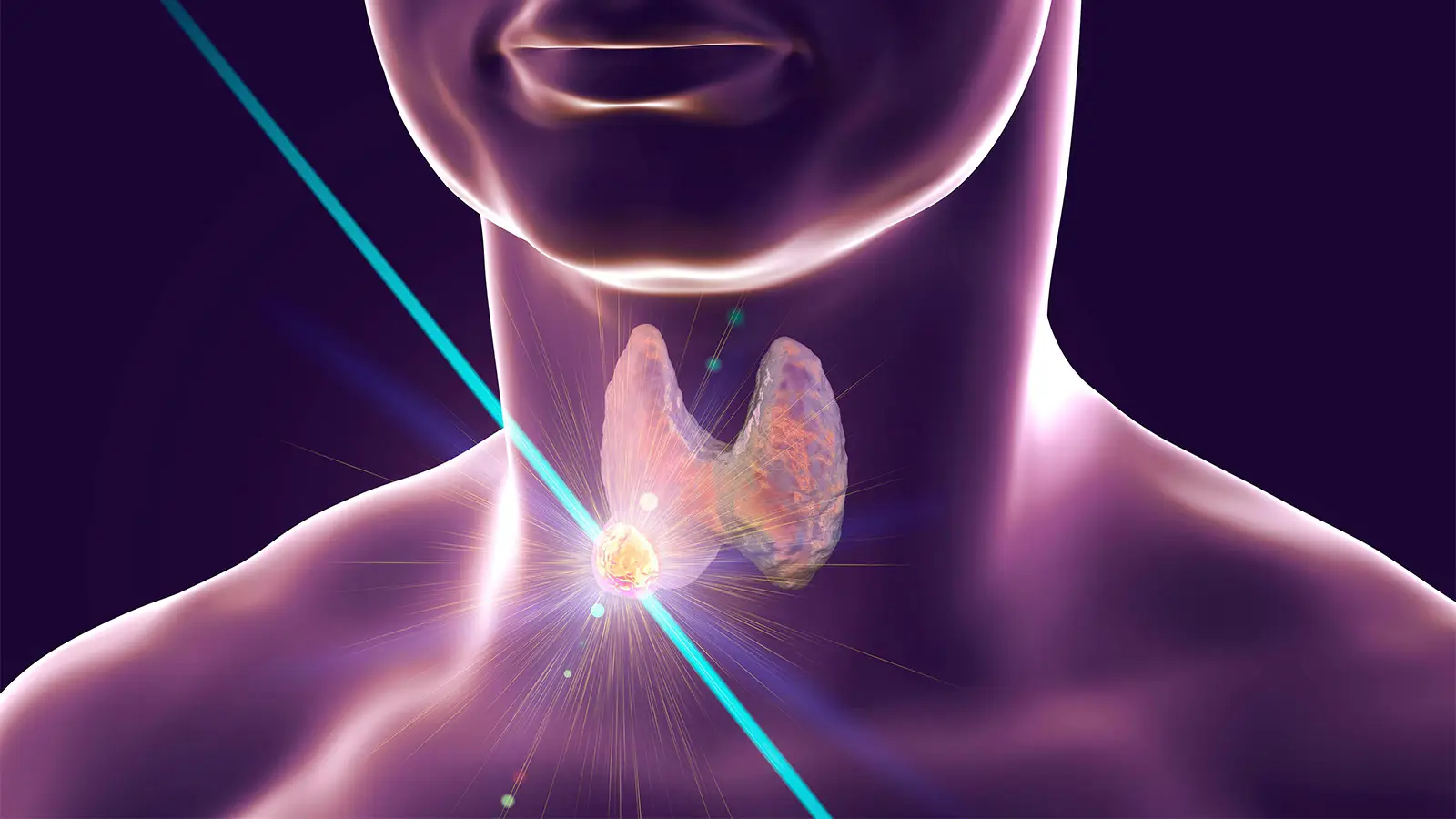
Ethanol Ablation (EA)
Ethanol ablation involves ultrasound-guided aspiration of cystic fluid followed by injection of ethanol into the cavity. Ethanol induces cellular dehydration, protein denaturation, vascular thrombosis, and subsequent fibrosis, leading to shrinkage of the cyst.
Radiofrequency Ablation (RFA)
Radiofrequency ablation uses high-frequency alternating current to generate heat (60–100°C), causing coagulative necrosis of targeted thyroid tissue. It can allow a significant and sustained reduction in nodule volume that can improve compressive and cosmetic symptoms without removing additional normal thyroid tissue and therefore more likely to preservation of normal thyroid function.
Microwave Ablation (MWA)
Microwave ablation is another thermal ablation technology. It uses electromagnetic microwaves to generate heat within tissues, producing larger and more uniform ablation zones compared to RFA. The procedure time may be shorter especially in larger nodules.